
A used car can look clean and drive well and still hide a flood, a total loss or a rolled-back odometer. Most of that is on paper somewhere. This guide is the order we would check things in before paying for any used car, from a private seller or a dealer.
1. Get the VIN and check it matches
The VIN (vehicle identification number) is the car's 17-character ID. Ask the seller for it before you travel to see the car. A seller who will not give the VIN is a warning sign on its own.
When you see the car, find the VIN in at least three places and make sure they are all the same:
- Dashboard: a small plate at the bottom of the windshield on the driver's side, readable from outside.
- Driver door frame: the sticker on the door jamb (it also shows the build month).
- Paperwork: the title, the registration and the insurance card.
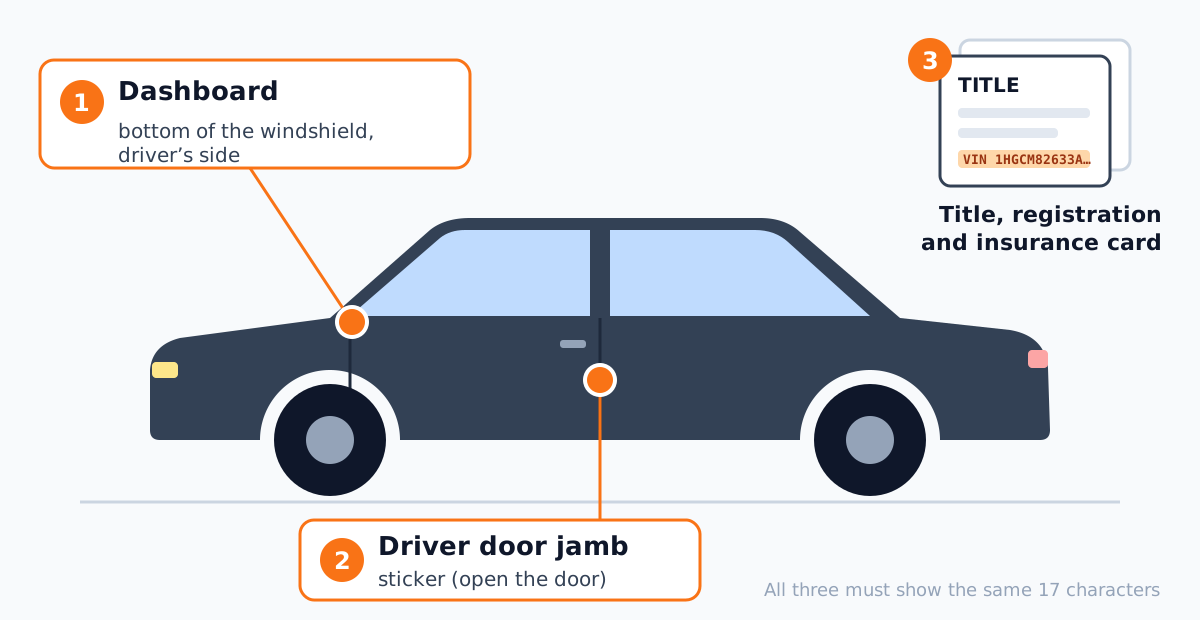
Scratched, loose or re-riveted VIN plates, or a door sticker that is missing on a car that is not very old, deserve a careful look. See where to find the VIN for more places.
2. Decode the VIN: is it really the car in the ad?
A VIN decode turns the 17 characters into the facts the maker recorded: make, model, model year, body, engine, drive type and the plant where it was built. It is free: enter the VIN in our decoder.
Compare the result with the ad. If the ad says V6 and the VIN says four-cylinder, or the model year is different, ask why. Our decoder also checks the VIN's check digit (the 9th character), which catches many typing mistakes and some fake VINs.
3. Check for open safety recalls
Recalls are free to fix at a franchised dealer, but many used cars still have open ones. Our VIN pages list the recall campaigns for the model and year, from NHTSA data. To see whether a recall was already repaired on this exact car, use the VIN search on nhtsa.gov/recalls or ask a dealer of the brand.
4. Read the title history
Every time a car is sold, moved to another state or re-registered, a state issues a new title and records the mileage. A vehicle history report puts those records in order. Look at three things:
Title brands
A brand is a word a state puts on the title record when something serious happened. The ones that matter most:
| Brand | What it means for you |
|---|---|
| Salvage / total loss | An insurer or state wrote the car off. It may have been badly damaged or stolen. |
| Rebuilt / reconstructed | A salvage car that was repaired and passed an inspection. Worth much less; repairs can hide problems. |
| Flood, fire, hail | Damage recorded by the state. Flood cars often get electrical and rust problems later. |
| Junk / parts only | Usually cannot be legally titled for the road again. |
| Odometer not actual | The mileage on the dash is not the real mileage. |
| Lemon / buyback | The maker bought the car back because of a defect. |
A car can carry a brand from one state and get a "clean" title in another (this is called title washing). That is why a report across all states matters more than the paper title in the seller's hand.
Mileage between titles
The odometer readings should only go up, and the miles per year should make sense. A lower reading than an earlier title is a red flag (a typing error at a title office, or a rolled-back odometer). A car with 9,000 miles a year for ten years and then 40,000 in one year is worth a question too.
Junk yard, salvage yard and insurance records
Junk and salvage yards and insurers report vehicles they take in or write off. A record there, on a car that is now for sale with a clean title, needs a very good explanation.
A real example from our first report
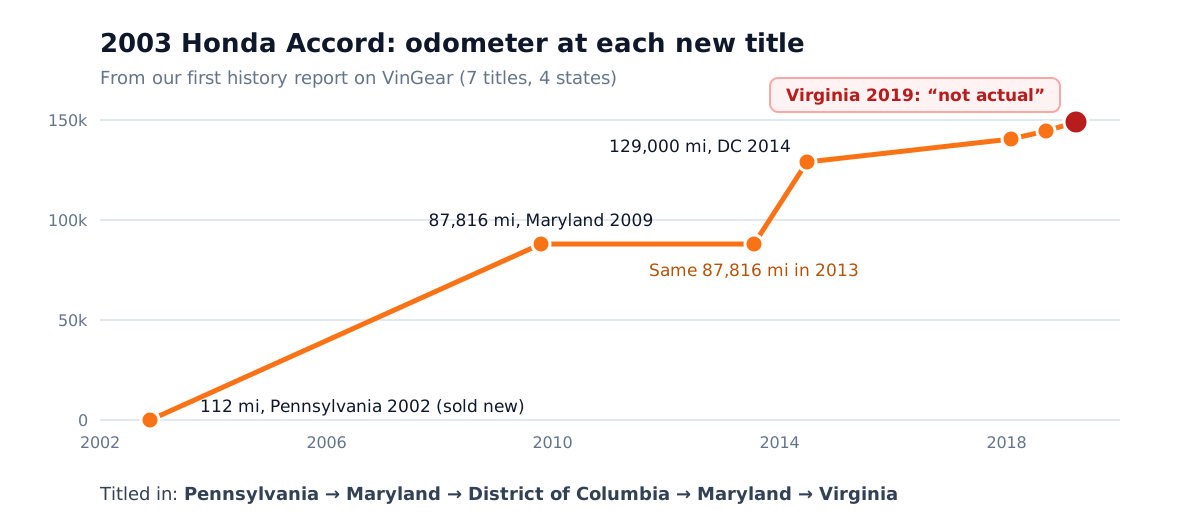
The first history report we ran on VinGear (our own test order) was for a 2003 Honda Accord. Here is what it showed, and what we would do with it:
- 7 titles in 4 states since November 2002: Pennsylvania, Maryland, District of Columbia, Maryland again, then Virginia.
- Mileage went from 112 miles when it was sold new to 148,985 in March 2019, about 9,100 miles a year on average. Two Maryland titles four years apart showed exactly the same reading (87,816), which is worth asking about.
- One title brand: Virginia marked the odometer as "not actual" on March 26, 2019. In plain words: the state does not trust the mileage on the dash.
- No salvage, flood, rebuilt or junk brands, and no junk yard, salvage yard or insurance records.
You can open the full report for this car on our sample report page.
Verdict for a buyer: not a crashed or flooded car as far as the records go, but the mileage cannot be trusted. We would ask for service records with mileage, price it as a higher-mileage car and have the engine and gearbox checked.
5. Check the title itself and any loan
- The seller's name on the title should match their photo ID. "I'm selling it for a friend" means you deal with the friend.
- A lienholder (bank or finance company) on the title means the car still has a loan. Do not pay until the seller shows a lien release, or pay the lender directly with their agreement.
- Be careful with "title in the mail", "lost title" or a title in another state's name that was never transferred.
Rules for VIN inspections and title transfers differ by state: see our VIN check guide for each state.
Free official checks you can add
- NICB VINCheck (nicb.org/vincheck): a free check for theft and total loss records reported by participating insurers.
- NMVTIS (vehiclehistory.bja.ojp.gov): the US Department of Justice's title system. It lists approved companies that sell title reports from it.
- NHTSA recalls (nhtsa.gov/recalls): open recalls on the exact VIN.
6. Get an independent inspection
Records only show what was reported. Many accidents are repaired without an insurance claim and never appear anywhere. Before you pay, have a mechanic you chose (not the seller's) put the car on a lift. Ask them to look for:
- Paint that does not match, uneven panel gaps and overspray on rubber seals (signs of body repairs).
- Rust or silt under the carpets and seats, a musty smell, or water lines in the lights (signs of a flood).
- Warning lights, stored fault codes and leaks.
- Wear on the pedals, seat and steering wheel that does not fit the mileage.
Quick checklist
- VIN from the seller before you go.
- Same VIN on dashboard, door and title.
- Free VIN decode matches the ad.
- Open recalls checked.
- History report: no serious brands, mileage only goes up.
- Seller's name on the title, no open loan.
- Independent inspection and a test drive.
If something does not add up, walk away. There is always another car.